
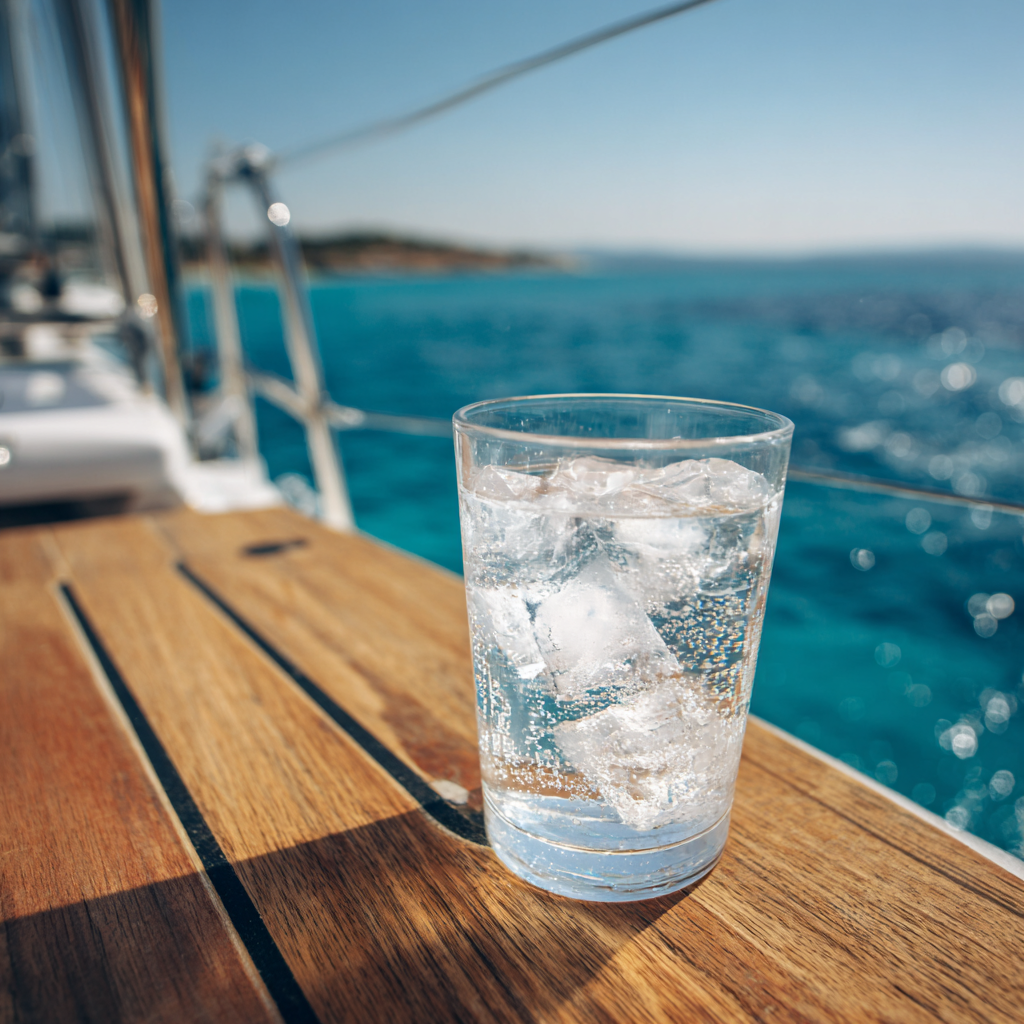
Sailors, cruisers, and ocean lovers share something important: a deep respect for the waters they navigate. When considering onboard equipment like a watermaker, it makes sense to ask how this technology interacts with the marine environment. Understanding the relationship between freshwater production at sea and ocean health helps boaters make informed decisions that align with their values.
In this article, we'll explore how marine watermakers function, what happens to the water that isn't converted to freshwater, how these systems compare to other water sourcing methods, and what the overall environmental footprint looks like. By the end, you'll have a clear picture of where watermakers stand when it comes to ocean stewardship.
Marine watermakers use a process called reverse osmosis to transform seawater into fresh, drinkable water. Seawater is drawn into the system, pressurized, and pushed through a semi-permeable membrane. This membrane allows water molecules to pass through while blocking salt and other dissolved solids. The result is clean freshwater suitable for drinking, cooking, and other onboard needs.
The technology itself is remarkably straightforward. High-pressure pumps do the heavy lifting, and modern systems have become increasingly efficient at managing energy consumption. Some units can produce anywhere from 25 liters per hour to several thousand, depending on the vessel's requirements and the system's capacity.
What makes this process relevant to environmental discussions is that it doesn't introduce foreign chemicals into the ocean. The system simply separates water from its natural salt content using physical pressure rather than chemical treatments. This mechanical approach is one reason why watermakers have become popular among environmentally conscious boaters.
When a watermaker produces freshwater, the concentrated saltwater left behind is called brine. This brine is returned to the ocean, which raises a fair question: does this discharge affect marine life? The short answer is that the scale matters enormously.
Industrial desalination plants that serve entire cities produce massive volumes of brine, and their environmental impact has been studied extensively. However, a watermaker on a recreational vessel or yacht operates at a tiny fraction of that scale. The amount of brine produced by a boat's system disperses almost instantly in the vast, moving body of water surrounding it.
Ocean currents, wave action, and the sheer volume of seawater ensure that small-scale brine discharge from individual vessels has no measurable effect on local salinity levels. The ocean naturally balances these minor additions, much like it absorbs and redistributes salt from evaporation and river inflows every day.
To fairly assess how watermaker technology affects ocean ecosystems, it helps to consider the alternatives. Without onboard freshwater production, boaters must either carry large water tanks or make frequent trips to marinas and ports to refill supplies.
Carrying more water means carrying more weight, which increases fuel consumption. More fuel burned means more emissions released into the atmosphere, contributing to ocean acidification and climate-related marine stress. Frequent port visits also mean more engine hours, more anchoring in sensitive coastal areas, and greater overall environmental disturbance.
Producing water onboard reduces these indirect impacts significantly. Boats can stay at sea longer, visit fewer crowded anchorages, and operate more efficiently with lighter loads. When viewed from this broader perspective, the environmental effects of marine watermakers compare favorably to traditional water sourcing methods.
Modern watermakers have made significant strides in energy efficiency. Early systems required substantial electrical power, but today's designs incorporate energy recovery technology that dramatically reduces consumption. Some systems cut electricity use by up to 80 percent compared to older models.
Lower energy demands mean less strain on a vessel's power generation systems, whether that's a diesel generator, solar panels, or wind turbines. For boats equipped with renewable energy sources, running a watermaker becomes an even greener proposition. The freshwater produced has virtually no carbon footprint beyond what the vessel already generates.
This efficiency also translates to practicality. Boaters don't need to run engines for extended periods just to make water, which reduces noise pollution, fuel use, and overall wear on equipment. The environmental benefits extend beyond the ocean itself to include air quality and resource conservation.
When examining whether watermakers impact ocean ecosystems, the evidence points to a reassuring conclusion. Small-scale reverse osmosis systems used on boats produce minimal brine that disperses harmlessly, require no chemical additives, and often reduce a vessel's overall environmental footprint by cutting fuel consumption and port dependency. For boaters who care about protecting the waters they love, understanding marine watermaker environmental considerations reveals that this technology aligns well with sustainable cruising practices.
If you're ready to explore how onboard freshwater production can enhance your boating experience while supporting your commitment to ocean health, our team is here to help. Contact us today to get a free quote for a marine watermaker and discover the right solution for your vessel.

Darryl Massey is a seasoned expert in reverse osmosis watermaker technology, with a keen focus on sustainable solutions. With over two decades at EcoSistems, Darryl combines deep technical knowledge and a commitment to innovation, contributing to the development of energy-efficient systems. His expertise ensures advanced, reliable solutions in water purification for clients across the globe.
WATERMAKERS
Sailboat Watermarker
Yacht Watermarker
Boat Watermarker
Reverse Osmosis Watermarker
Watermarker Machine
Marine Watermarker
DESALINATION
Sea water dasalination device
Desalination plant
Reverse osmosis desalination system
Reverse osmosis desalination machine
Reverse osmosis filter
Desalination machine for boat
Reverse osmosis desalination for boats
Desalination machine for sail boat
Desalination machine for yacht
