
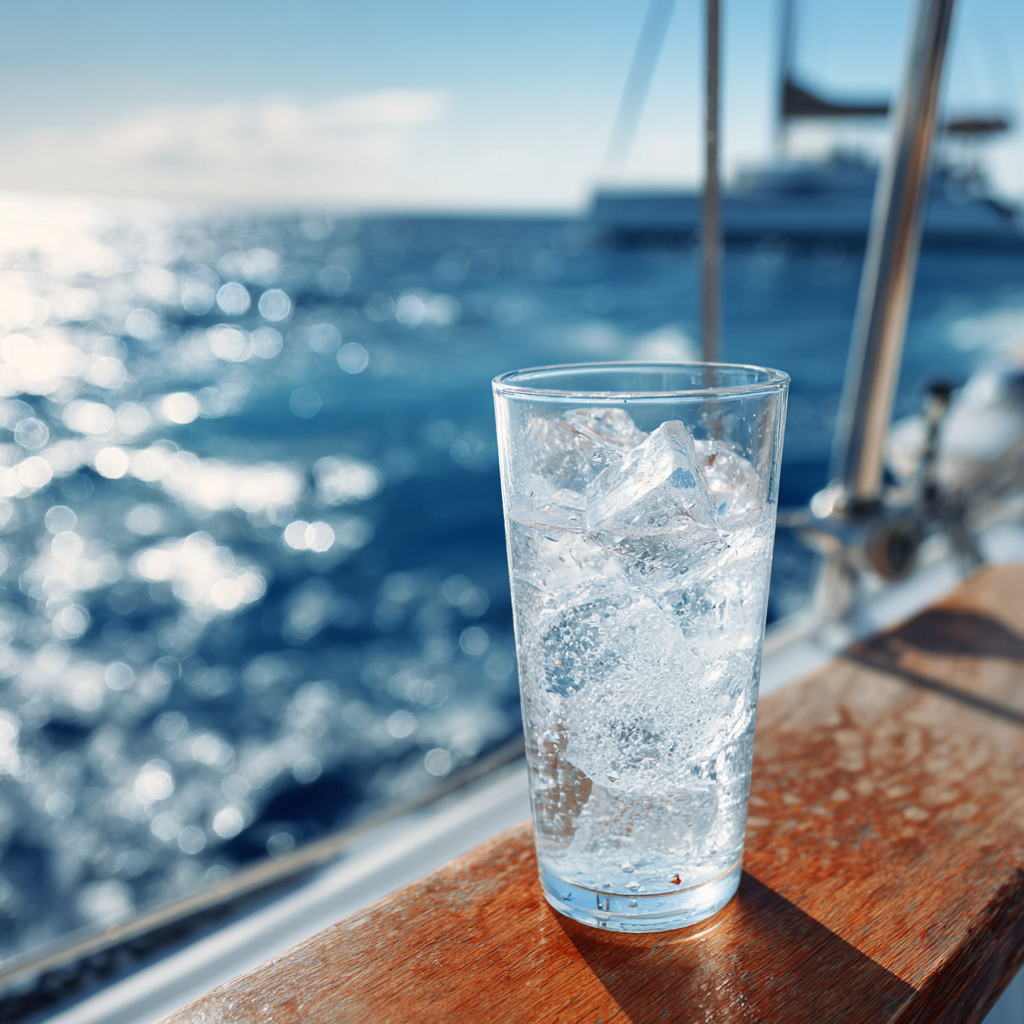
Plastic waste in our oceans has become one of the most visible environmental challenges of our time. For boaters, cruisers, and anyone spending extended time on the water, the question of how to source drinking water responsibly carries real weight. Choosing between stocking up on bottled water or producing freshwater onboard has implications that extend far beyond convenience.
This article will examine the environmental footprint of both options by looking at plastic pollution, carbon emissions, energy consumption, and long-term sustainability. We will also explore how the lifecycle of each choice affects marine ecosystems and why more sailors are rethinking their approach to hydration while cruising.
Every year, hundreds of billions of plastic water bottles are produced globally, and a significant percentage of these end up in landfills or, worse, in the ocean. For boaters provisioning for a voyage, stocking cases of bottled water means contributing to this cycle of single-use plastic consumption. Even with the best recycling intentions, access to proper recycling facilities is often limited in remote anchorages and island destinations.
The production of plastic bottles requires petroleum-based materials, which means the environmental cost begins long before the water even reaches the consumer. Manufacturing a single one-liter plastic bottle uses approximately three liters of water and significant amounts of fossil fuel energy. When you multiply this by the thousands of bottles a cruising family might consume over a year, the cumulative impact becomes substantial.
Once discarded, plastic bottles can take up to 450 years to decompose. During this time, they break down into microplastics that enter the marine food chain, affecting fish, seabirds, and other ocean life. For sailors who cherish the marine environment, this reality creates a compelling reason to seek alternatives.
The sustainability of onboard water production versus packaged water becomes clear when examining carbon emissions. Bottled water must be manufactured, filled, transported, and refrigerated throughout its journey to the consumer. Each step in this supply chain adds to the overall carbon footprint, with transportation often being the largest contributor.
Consider a cruising vessel in the Caribbean that relies on bottled water purchased at various ports. That water may have been bottled in Europe, shipped across the Atlantic, trucked to a distribution center, and then delivered to a local store. The total distance traveled can exceed thousands of miles, with corresponding fuel consumption at every stage.
In contrast, producing freshwater directly from the surrounding ocean eliminates virtually all transportation-related emissions. The energy required to operate a reverse osmosis system is consumed locally and, on many modern vessels, can be offset by solar panels or wind generators. This localized production model represents a fundamentally more efficient approach to meeting hydration needs.
When comparing the eco-friendly aspects of desalination systems to plastic bottles, resource efficiency tells a compelling story. A quality marine reverse osmosis unit can operate for many years with proper maintenance, producing thousands of liters of freshwater without generating any plastic waste. The only consumables are filters and membranes, which are replaced infrequently and represent a tiny fraction of the waste associated with bottled water.
Storage space on a boat is always at a premium, and cases of bottled water take up valuable room that could be used for provisions, gear, or personal items. This space inefficiency also translates to weight, which affects fuel consumption and vessel performance. Carrying hundreds of kilograms of bottled water means burning more fuel to move that weight through the water.
The waste management challenge extends beyond the bottles themselves. Packaging, caps, labels, and secondary packaging like cardboard cases and plastic shrink wrap all add to the waste stream. For sailors trying to minimize their environmental impact while enjoying extended voyages, eliminating this constant flow of disposable materials offers both practical and ethical benefits.
Adopting onboard water production creates positive ripple effects that extend beyond individual consumption choices. When boaters demonstrate viable alternatives to single-use plastics, they inspire others in the maritime community to reconsider their own practices. Marinas and cruising destinations also benefit from reduced waste management burdens when fewer plastic bottles enter the local waste stream.
The environmental comparison between watermakers and bottled water also favors desalination when considering marine ecosystem health. Fewer plastic bottles in circulation means fewer opportunities for that plastic to end up in the ocean, where it harms wildlife and degrades the very environments that sailors travel to enjoy.
Looking at the broader picture, reducing demand for bottled water helps decrease the overall production volume, which in turn reduces the industrial footprint of the bottled water industry. Every vessel that switches to onboard water production represents one less customer supporting an environmentally costly supply chain.
When weighing the environmental impact of different water sourcing options, onboard desalination offers clear advantages over bottled water. From eliminating plastic waste and reducing carbon emissions to improving resource efficiency and supporting healthier marine ecosystems, producing your own freshwater while cruising aligns with responsible environmental stewardship.
At Eco Sistems USA, our team has spent over 20 years developing reverse osmosis technology that makes sustainable cruising practical and accessible. Our energy-efficient systems reduce electricity consumption by up to 80%, allowing you to produce clean drinking water while traveling lighter and using less fuel. Get a free quote for a marine watermaker today and take a meaningful step toward reducing your environmental footprint on the water.

Darryl Massey is a seasoned expert in reverse osmosis watermaker technology, with a keen focus on sustainable solutions. With over two decades at EcoSistems, Darryl combines deep technical knowledge and a commitment to innovation, contributing to the development of energy-efficient systems. His expertise ensures advanced, reliable solutions in water purification for clients across the globe.
WATERMAKERS
Sailboat Watermarker
Yacht Watermarker
Boat Watermarker
Reverse Osmosis Watermarker
Watermarker Machine
Marine Watermarker
DESALINATION
Sea water dasalination device
Desalination plant
Reverse osmosis desalination system
Reverse osmosis desalination machine
Reverse osmosis filter
Desalination machine for boat
Reverse osmosis desalination for boats
Desalination machine for sail boat
Desalination machine for yacht
